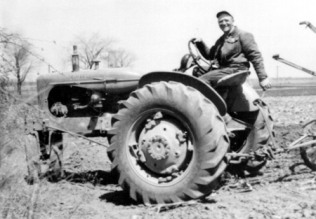
Just talking to ourselves and those from the future who follow the breadcrumbs.
Citizenship, Watershed and Commonwealth
Citizenship Papers: Essays – Wendell Berry – Google Books.
Everyone that knows Wendell understands why he doesn’t use computers. Although I don’t know him personally, my sister and brother-in-law do and I’m staying at their place across Kentucky from the Berry’s in Henry County over here in Ballard County. Debby and Toby, much like Tonya and Wendell are a bit shy when it comes to using the web but those who know me understand why I’m not.
What is it about the web that simply can’t be trusted? I don’t even think about it much any more but I know it’s still there. Like a stream, I just flow around it. The work I do these days, as in the past, involves online community and offline community and I am a living interface between those two parts of the ecosystem. I hope to represent my circles well – honestly, fully, openly and justly. If I am true to the things, people and places I represent, I can also do this work fearlessly.
Those of us who use and “inhabit” the web must understand that we remain a minority, especially from the global ecosystem perspective. We can think of the Internet as another kind of watershed but the virtual world must never see itself as upstream from the real one. Wendell’s teachings bring my places – the Earthly ones – into focus. In the same way that a map of a place is not the place, the Internet is not the real world. When we exalt the man-made, we discount the divine. Let’s not be doing that “here” on the web.
The OzoneFarm Experiment looks for balance in the contextual relationship between the Real and the Virtual. If we are serious about saving the planet, promoting understanding, defending our values and living better, we will adjust and fine tune our built environment (which includes our computers, wires and gizmos) in a way that honors our natural environment (which includes our thoughts, observations and ideas). Wendell Berry’s work is as modern and up-to-date as any other conscientious, thinking person on the web or off.
Please do read some Wendell and comment below. Please do get involved in a local permaculture project or community-building adventure and tell us about it.
A Real Place

Maslow and the OSI Model

| OSI Model | ||||
|---|---|---|---|---|
| Data unit | Layer | Function | ||
| Host layers |
Data | 7. Application | Network process to application | |
| 6. Presentation | Data representation and encryption | |||
| 5. Session | Interhost communication | |||
| Segment | 4. Transport | End-to-end connections and reliability | ||
| Media layers |
Packet | 3. Network | Path determination and logical addressing | |
| Frame | 2. Data Link | Physical addressing | ||
| Bit | 1. Physical | Media, signal and binary transmission | ||
This is from a conversation at Wikiversity:
Good to see you back on the scene here, John. I read the Empathy paper. Nice. Especially the part about the congruency of Maslow’s hierarchy of needs and the OSI model. Nice! —CQ 02:01, 5 September 2009 (UTC)
The idea of layers, or levels
This text is from writing about my learning from working in theraputic environments[2]
Tying together ideas so apparently different was helped by my information engineering background; I adapted the abstract concept of “network layering” that links different abstract approaches to Internet communications. The different layers describe all the various aspects of network communication abstractly ranging from the user’s applications, through addressing and routing protocols to a physical layer that describes the wires and electrons. For every interaction on the Internet, each layer is utilized and they all work towards the same purpose but each layer describes, abstractly, a different aspect of the communication linking process. Empathy, as emotional communication, can likewise be described in layers as every empathic action has many facets, perhaps even more than Internet communications protocols. Immediately apparent is an idea of scale that follows each aspect of an emotional communication from birth of ideas and emotions within individuals at the neural level that are communicated through expressions, to the wider reaching effects that these communications have on social relationships, and even society.
This adaption of network layering helps me conceive of how every emotional communication event “hits” on every level. In the education of children, for instance, happy emotions “hit” their surrounding world through positively constructive activities because they spring forth from healthy neurons. It is entirely misleading to think of any empathic event in isolation. Empathy is what the world needs more of, and on a worldly scale, empathy is the most profoundly human concept.
Act Locally
Applying the OSI Model, or at least incorporating its framework within priority schema or decision-making frameworks, may help people visually place various physical (or metaphysical) needs in perspective on actual computing networks. For example, imagine “tuning” the data link layer that connects your small farm to the needs of a supporting CSA group in town. Traversing up and down the needs pyramid and the OSI layers offers some interesting solutions.
Example: Local food systems
Sensor-actuator networks
Remote sensing and actuation are by no means new. The USGS has installed thousands of sensing units that yield terabytes of data for those who study and manage our watershed systems. Many a city uses remote control for everything from simple valve and pump mechanisms in treatment plants to sophisticated robotic cameras and listening stations for ghod knows what. Scaling these technologies down for use at the local level makes sense given the emergence of commons-based infrastructure and recent models for consensus-driven urban, rural and suburban planning.
Case in point: riparian zoning model – http://www.eightmileriver.org/zone/
Riparian zones can be fairly easily outfitted with sensors and actuators that can assist in long-term data modeling for ecosystem health and watershed management. Beyond “ownership and control” paradigms, new governance models are taking forms that allow groups of land users to bring a collective approach to committing to the extended maintenance of a local ecosystem. Of course nothing can take the place of human eyes and ears atop boots on the ground to enforce (substantiate) our claims to a better built environment, but web-enabled sensing and actuation can fill some specific needs.
I hope to attract some involvement toward building some testbeds in an around the Americas as has been done in Europe, Australia and other parts. I believe that commons based peer production is better than patents and trade secrets, by the way.
attention: tibi – Sensorica.com
KeyLineAmerica.org
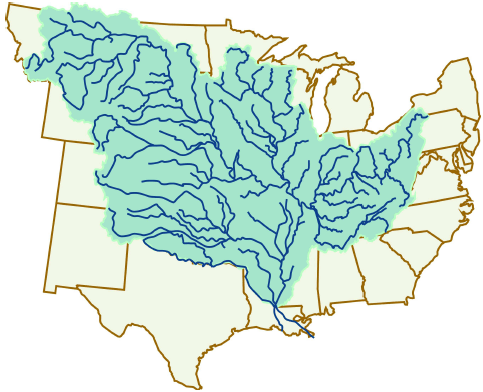
The application of Keyline design principles for North American agrarian ecosystem services.
Continued from Keyline design principles
The problems we create by placing dotted lines on maps are sometimes greater when we back up and look at them from a different perspective. Drawing lines based upon the notions of ownership, governance, dominion, infrastructure and other abstract constructs can lead to ecosystem damage, poor performance, pollution, and other ugly manifestations of the lack of thoughtfulness. The pure genius of the land itself should inspire humanity to create a built environment that is worthy of the natural environment that provides a substrate upon which and from which we earn our livings.
KeyLineAmerica.org proposes to become a think-tank (for lack of a better term) that looks at the emerging open data structures and open geographic information systems as they apply to advanced techniques for designing permaculture-based systems and infrastructures for local food ecosystems. The idea is to work with topographical and hydrological properties of landscapes before building anything of lasting impact. Everything we do on the land has lasting impact, but we are responsible to the next generation to assure that the products, processes and provisions we bring forth have lasting value. Keyline and permaculture studies help to take us closer to what nature itself has in mind for our use of the land.
…
Bibliography:
local projects: https://sites.google.com/site/occupyndg/home/projects/new-economy-initiatives/local-food-systems
Hello world!
Welcome to WordPress.com. After you read this, you should delete and write your own post, with a new title above. Or hit Add New on the left (of the admin dashboard) to start a fresh post.
Here are some suggestions for your first post.
- You can find new ideas for what to blog about by reading the Daily Post.
- Add PressThis to your browser. It creates a new blog post for you about any interesting page you read on the web.
- Make some changes to this page, and then hit preview on the right. You can always preview any post or edit it before you share it to the world.
 ozonefarm